Babette Freniere
Interview with the VampireBabette Freniere is the most capable of the five Freniere sisters and the mortal figure through whom Louis’s early vampiric existence briefly produces protection rather than predation. After her brother dies in a duel, she is left to preserve a plantation whose wealth, family arrangements, and social future depend upon him. Louis appears to her as a strange, half-seen visitor, but his counsel enables her to take control of the estate. Her later success—followed by social ostracism, madness, and an early death—makes her one of the clearest measures of the human cost of Louis’s attempts to intervene in mortal life.
Identity and Family Burden
Babette belongs to the old French family established at Freniere plantation, a large sugar property whose apparent magnificence rests on precarious finances. The household contains five young women and one young man. Three of the sisters are not expected to marry, while the two younger women still depend on the family’s ability to arrange marriages and provide dowries. Their entire material future rests on their brother, who is expected to manage the plantation, negotiate marriages, assemble dowries, and defend the family against the pressures of debt and the wider material world.
The plantation’s economy is sustained by repeatedly mortgaging the next year’s sugar crop. Its cultivated land and social splendor therefore conceal fragility: the family requires not only a manager but someone able to understand an intricate financial system built on speculation, labor, and inherited standing. Although none of the sisters has been educated to run the plantation, Louis regards Babette as exceptional. She is as intelligent as her brother and, in his judgment, wiser than he is. Her importance lies not in conventional authority but in the judgment and moral strength that the family has failed to recognize as administrative power.
The Brother’s Death and Louis’s Intervention
The crisis comes when the Freniere son enters a duel after insulting a young Spanish Creole at a ball. Lestat chooses to pursue him as prey, while Louis knows the family and understands what the young man’s death would mean. Lestat kills him in the marsh, leaving the body to slip beneath the water. Louis’s anger at Lestat is intensified by the recognition that vampirism, for Lestat, has become an instrument of revenge against life rather than a mode of perception or responsibility.
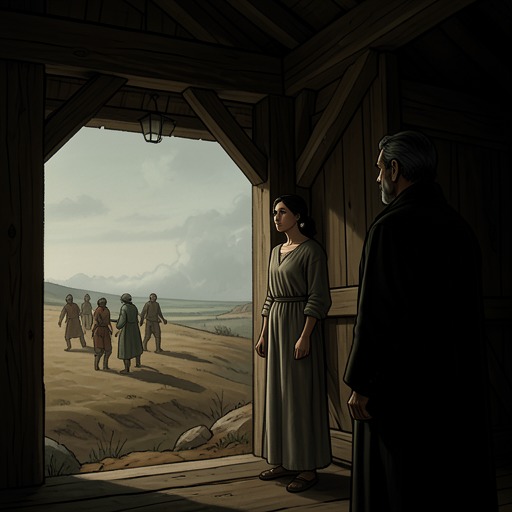
Near dawn, Louis returns to Freniere plantation and sees the sisters gathered in the parlor, still dressed in black and waiting for news. They resemble mourners before the death has been formally announced, but Babette alone appears resolute. Louis reads in her face a willingness to assume the burden that her brother has carried, even though the task ahead is nearly impossible. He risks exposure by making himself visible through the window glass: first as a strange reflection, then as a vague figure beside the gallery’s columns, and finally by stepping into the candlelight.
Louis tells Babette that her brother fought bravely and won the duel but is dead. The essential message, however, is not the death itself. He insists that the plantation can be saved if she assumes her brother’s position, refuses arguments about convention and propriety, learns what she does not know, and takes control of her own life. Without such action, he predicts that the five sisters will be reduced to a small pension and lose the family’s land and social future. Babette listens without surrendering to superstition. When Louis disappears, she makes the Sign of the Cross and returns to her sisters, carrying the burden of decision rather than merely receiving a ghost’s warning.
Independence and Social Ostracism
Babette follows the advice. Her decision to operate the plantation without a man in the house scandalizes the river coast, yet she succeeds in holding the estate together. She manages a substantial dowry for her younger sister and marries herself the following year. Her achievement is practical as well as symbolic: she takes over the role assigned to her dead brother and proves that the family’s survival did not depend on male authority as absolutely as its customs had assumed.
Her success does not free her from social punishment. Babette is isolated because she has violated expectations about how a woman of her position should live and govern. Wealth alone means little to her; family and lineage matter more, so the ostracism wounds her in precisely the terms she values. Louis later observes that the scandal wears her down and that she begins to give up inwardly even while she continues to manage the plantation. Her independence is therefore real but costly: she achieves administrative power at the price of belonging.
Louis returns to her in the garden and urges her to oppose the people who want her to retire after her brother’s death. He advises her to organize a philanthropic ball for a religious cause, invite her deceased mother’s closest friends as chaperones, and re-enter social life through confidence and public virtue. Babette accepts the plan as brilliant. She does not know what Louis is, and he refuses to tell her, but she can only interpret his intervention as the work of an angel. The ball succeeds, restores her social position, and helps persuade the families of potential suitors that her wealth and respectability remain secure.
After her marriage, Louis continues to visit on summer nights without allowing her to see him. He comes not to feed but to discover whether she is happy, and her happiness produces happiness in him. This repeated unseen visitation reveals the limits of their connection. Louis feels affection and a form of love for Babette, yet he can preserve the relationship only by remaining outside her human world. He protects her through anonymity while also making genuine mutual knowledge impossible.
The Fire at Pointe du Lac
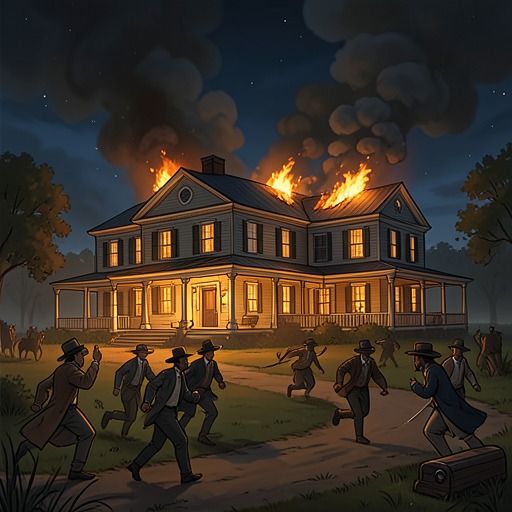
Babette becomes important again when Louis burns Pointe du Lac after the plantation’s enslaved people grow suspicious of the unexplained deaths surrounding Louis and Lestat. The fire forces the vampires to flee before dawn. Louis loads his coffin into a carriage and goes to Freniere plantation, while Lestat follows because he intends to continue toward New Orleans and decides that hiding there may serve him as well.
Babette is awake and directing the response to the fire. She has sent carriages to Pointe du Lac and enslaved workers to help fight the blaze, while frightened runaways are kept apart from the others. She suspects that something dreadful has happened, perhaps murder, but not the supernatural explanation. Louis finds her in the study as she records the fire in the plantation diary, a detail that places her practical administration against the vampires’ clandestine crisis.
With dawn approaching, Louis asks her for a room, a key, and a promise that nobody will enter until nightfall. He reminds her that he previously helped her when she needed guidance and that he has watched over her happiness. When she considers whether he may come from the devil and begins to turn toward him, he extinguishes the candle and reveals more fully what he is. He tells her that if she refuses, he will die, while insisting that he would rather die than kill her. Babette gives him a ground-floor wine-storage room, and Louis and Lestat bring their coffins inside and barricade the door.
Babette goes further than Louis requests: she locks the room again from the outside. She has heard the stories told by the enslaved people and evidently understands that the visitors are dangerous or unnatural, even though the narrative never supplies her complete interpretation. Her action protects the household from the vampires while also giving them refuge. It is an act of controlled hospitality, founded not on trust but on judgment and a promise whose terms she enforces.
Death, Madness, and Narrative Significance
Babette’s later fate is reported through Louis’s recollection rather than shown directly. She dies young and insane, finally restrained because she wanders toward the ruins of Pointe du Lac insisting that she has seen the devil and must find him. The plantation is said to be haunted; overseers cannot be kept, and enslaved people run away. Lestat treats the Freniere place and Babette’s tragedy as material for mockery, but Louis cannot hear her name without confronting his responsibility.
Louis had sometimes thought of returning to Babette to repair what he had done, and at other times imagined that the damage might heal without his intervention. His growing distance from his former attachment, produced by a new life of nightly killing, allows him to watch the tragedy as though from a theater balcony: moved, but not moved enough to enter the scene and save its actors. Babette’s collapse thus marks a moral failure in Louis’s development. His counsel genuinely enables her achievement, yet his supernatural presence, secrecy, and later abandonment help create the conditions in which her life becomes haunted by an experience she cannot integrate.
Babette also functions as a contrast to the vampires around her. Lestat sees people as objects of appetite or revenge; Louis can recognize feeling but remains divided between compassion and detachment; Babette, by contrast, turns grief into work, assumes authority, and acts decisively in conditions she cannot fully explain. Her strength is not romanticized as invulnerability. The same sensibility that makes family, lineage, and social recognition meaningful also makes ostracism destructive. Her story shows that Louis can enter mortal life as a guardian, adviser, or benefactor, but cannot escape the violence and distortion produced by his hidden nature.
In the larger narrative, Babette is remembered alongside Paul, Louis’s sister, and the ruins of Pointe du Lac as part of the mortal world Louis has lost. Her plantation links family inheritance, sugar wealth, gendered authority, and the violence of the vampire’s concealed economy. Her rise demonstrates the possibility of resistance within a rigid social order; her madness and death demonstrate that even apparently benevolent supernatural intervention can leave a mortal life permanently marked.